The Avengers: A Jewish War Story
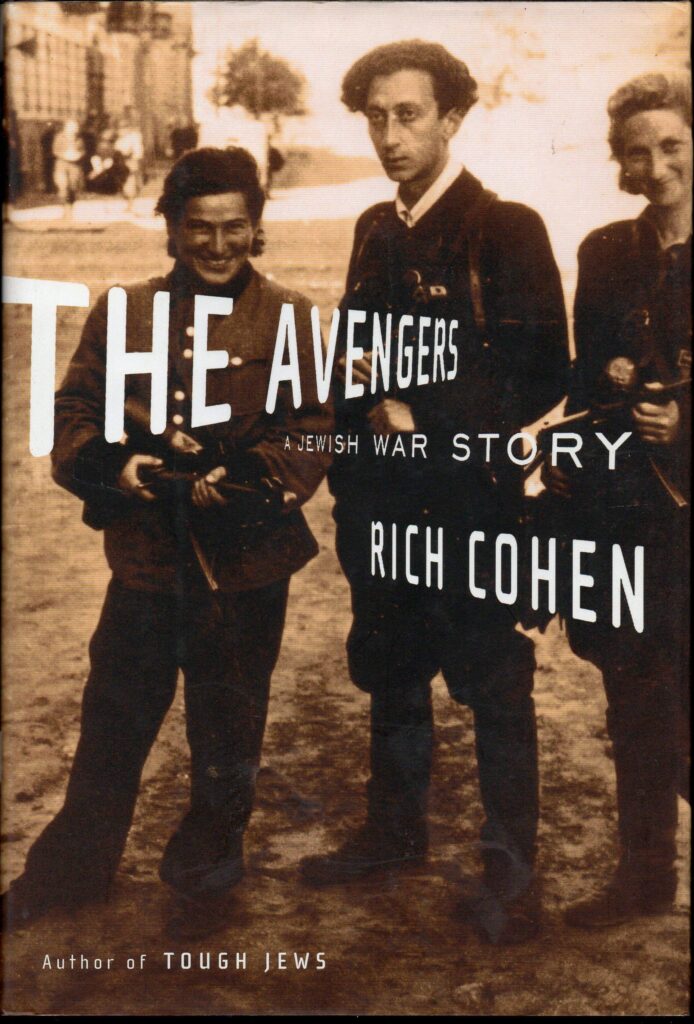
The Avengers: A Jewish War Story (also published as The Avengers) by Rich Cohen is a gripping non-fiction book published in 2000. It tells the true story of a group of young Jewish resistance fighters during and after World War II, focusing on their armed struggle against the Nazis and their quest for revenge.OverviewThe book centers on three key figures:
  • Abba Kovner (a charismatic poet and leader),
  • Vitka Kempner (Kovner’s partner and a daring fighter),
  • Ruzka Korczak (Cohen’s cousin, who later became a prominent educator in Israel).
These three, along with other young Jews (many in their teens and early twenties), formed an underground movement in the Vilna Ghetto (in Nazi-occupied Lithuania) in the early 1940s. They organized sabotage, escapes, and armed resistance against the Nazis.When the ghetto was liquidated, they fled to the Baltic forests and joined partisan groups, fighting alongside the Soviets while targeting German supply lines, trains, and troops. Cohen emphasizes their courage, ingenuity, and defiance, challenging the common narrative of Jewish passivity during the Holocaust.Post-War Revenge and LegacyAfter the war, the survivors (known as the Avengers or Nakam—”Revenge” in Hebrew) continued their mission. They helped smuggle Jewish refugees across Europe toward Palestine (aiding the exodus to the future State of Israel) and plotted large-scale revenge against Germans. Their most famous attempt involved poisoning bread supplied to Nazi prisoners in Nuremberg in 1946 (though the plan caused illness but fewer deaths than intended). The book explores the moral complexities of revenge, with Cohen describing Kovner as a “fanatic” in some respects.The fighters eventually settled in Israel, where they helped defend it during the 1948 War of Independence and built new lives, moving beyond violence.Style and ThemesCohen’s writing is vivid, suspenseful, and personal—he draws from family connections and interviews with survivors. The book is often described as “riveting,” “poignant,” and “uplifting” in its portrayal of resistance, dignity, and redemption. It highlights Jewish agency and heroism, contrasting with typical Holocaust stories centered on camps.It’s a powerful read that explores themes of resistance, revenge, courage, and the long shadow of trauma. Many readers call it a “page-turner” that could make a great film.If you’d like quotes, specific chapter breakdowns, or comparisons to other books on the same topic (like Dina Porat’s Nakam), let me know!