The Jewish Avengers’ Plan to Poison German Water Supplies
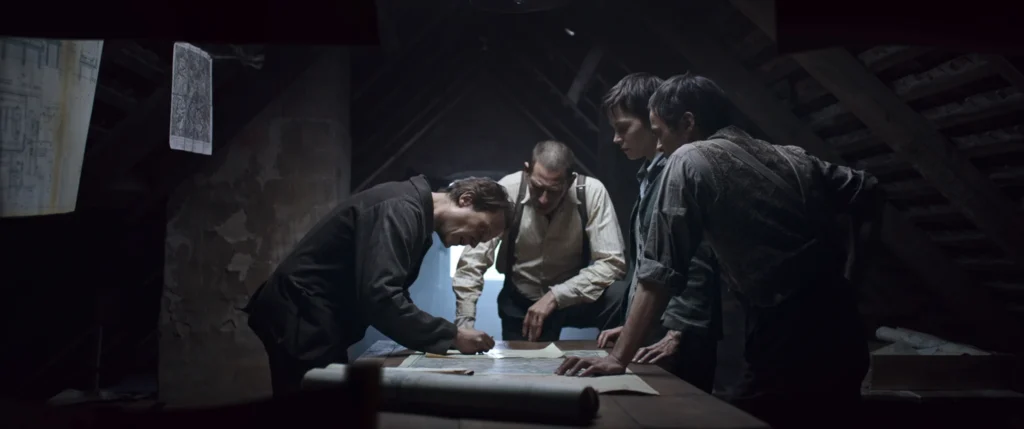
In the immediate aftermath of World War II, a small group of Jewish Holocaust survivors known as Nakam (“Revenge” in Hebrew) planned one of the most audacious acts of retribution in modern history.
Led by the Vilna Ghetto partisan commander and poet Abba Kovner, the group—roughly 50 young men and women—sought to answer the murder of six million Jews with a massive act of vengeance: poisoning the drinking water of several major German cities.
The plan, conceived in 1945, aimed at Nuremberg, Hamburg, Munich, and Weimar, among others. The goal was explicit: “a nation for a nation.”
Kovner and his comrades believed that ordinary Germans had been complicit in—or at least indifferent to—the genocide, and that only a catastrophe on a similar scale would force acknowledgment and atonement. They estimated that poisoning the reservoirs of these cities could kill hundreds of thousands to millions of civilians.
Nakam obtained large quantities of toxic arsenic compounds and typhus bacteria. The group divided into cells: some operated in Paris, others in Germany and Palestine.
Kovner himself traveled to Palestine to secure the poison from sympathetic chemists. The operation required infiltrating water treatment plants, a task that demanded forged documents, German-speaking operatives, and precise timing.
By early 1946 the plan was in motion. Three Nakam members—disguised as German engineers—attempted to enter the waterworks in Nuremberg. They carried canisters of poison and intended to dump them into the main reservoir.
However, the attempt failed. Guards grew suspicious, the operatives were forced to flee, and the poison was never released into the system. Similar efforts in other cities either collapsed due to logistical problems, increased security, or internal doubts about the morality and practicality of mass civilian deaths.
Kovner later described the plan as both necessary and impossible. Many members of Nakam itself were divided—some felt that killing innocent children crossed a moral line no different from the Nazis’. By spring 1946 the large-scale water-poisoning scheme was abandoned.
Instead, Nakam shifted to a smaller, more targeted action: on April 13–14, 1946, operatives poisoned thousands of loaves of bread destined for a U.S.-run POW camp near Nuremberg holding former SS men. Several thousand prisoners fell ill, though the number of deaths remains disputed and appears to have been low because the poison was detected early.
The water-supply plot never came to fruition, but it remains one of the starkest symbols of the rage and despair felt by survivors who believed the world had failed to deliver justice.
Nakam’s leaders did not see themselves as criminals; they saw themselves as the last voice of the six million who could no longer speak.
The attempt—though unrealized—stands as a haunting testament to the moral abyss left by the Holocaust and the desperate measures some felt were required to answer it.