The Jewish Avengers’ Poisoned Bread Operation
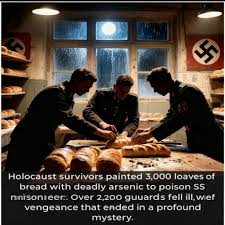
In the spring of 1946, the Jewish revenge group Nakam (“Revenge”) carried out one of the few concrete acts of retribution they managed to execute after World War II.
Led by Abba Kovner and coordinated by operatives including Joseph Harmatz, Yitzhak Avidov, and others, Nakam shifted focus from their failed large-scale water-poisoning plan to a more limited but still symbolic target: former SS men held in American-run prisoner-of-war camps.
The chosen site was Stalag XIII-D near Nuremberg, a camp housing thousands of suspected war criminals and SS personnel awaiting trial or release. Nakam viewed these men as direct participants in the machinery of genocide, many still unpunished.
On the night of April 13–14, 1946, a small team of Nakam members infiltrated the bakery that supplied bread to the camp. Disguised and using forged papers, they coated approximately 3,000 loaves with a tasteless arsenic-based compound they had prepared earlier.
The next morning, the bread was distributed to the prisoners. Within hours, hundreds began reporting severe stomach pains, vomiting, and diarrhea. Estimates vary, but between 2,000 and 3,000 German POWs became ill. The exact number of deaths is disputed—some accounts claim a handful died, while others suggest the toll was higher before medical intervention. The poisoning was detected relatively quickly because the symptoms were unmistakable and the camp authorities responded with urgency.
The operation was not intended to be subtle. Nakam wanted the act to be recognized as retribution, even if the world condemned it. A leaflet left at the scene (though not widely circulated at the time) reportedly declared that this was justice for the six million Jews murdered.
The plot caused immediate international controversy. Allied authorities launched an investigation, but the perpetrators had already dispersed. No Nakam members were ever arrested for the bread poisoning. The incident was largely downplayed in the postwar German and Western press, partly because the victims were former SS men and partly because the scale was far smaller than Nakam had originally envisioned.
For the survivors who carried it out, the action was never about mass murder for its own sake. It was a desperate attempt to make at least some of the perpetrators feel—even briefly—the helplessness and terror their victims had endured. Many Nakam members later said the bread operation was both a partial fulfillment of their vow and a painful compromise after the larger plan collapsed.
The poisoned bread incident remains one of the most direct and documented acts of Jewish postwar revenge. It stands as a raw, controversial marker of the moral and psychological landscape left behind by the Holocaust—a moment when a handful of survivors tried to answer unimaginable loss with an act of calculated retribution.