Jewish Women Who Fought Back: Holocaust Resistance FightersDuring the Holocaust
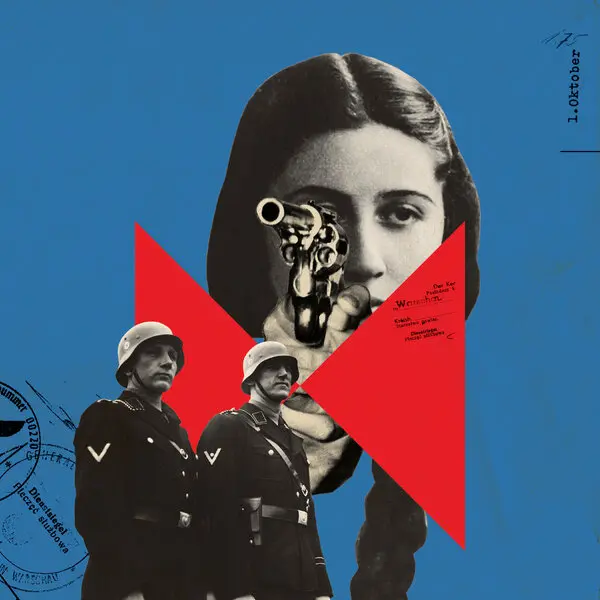
During the Holocaust, Jewish women played extraordinary roles in resistance against the Nazis, defying both the machinery of genocide and the gender norms of their time. Far from being passive victims, many became armed fighters, couriers, saboteurs, and leaders in ghettos, forests, and camps.
In the Ghettos
In the Vilna Ghetto, Vitka Kempner and Ružka (Rozka) Korczak were central figures in the United Partisan Organization (FPO). Vitka carried out one of the first acts of sabotage in occupied Europe when she placed explosives on a German supply train in 1942. Ružka, a teacher turned commander, helped organize escapes to the forests and led combat units. Both survived the war and later settled in Israel, where they continued educational and memorial work.Abba Kovner’s partner Vitka was also instrumental in post-war revenge efforts with the Nakam group, smuggling poison and coordinating operations against former Nazis.In the Bialystok Ghetto, Chaika Grossman was a key leader in the underground. She negotiated with Polish resistance groups, smuggled weapons, and fought in the ghetto uprising of August 1943. She survived by escaping to the “Aryan” side and continued underground work in Warsaw.Mordechai Anielewicz’s close comrade in the ŻOB (Jewish Fighting Organization) in Warsaw was Zivia Lubetkin. One of the few women on the command staff, she helped plan the Warsaw Ghetto Uprising of April–May 1943, fought on the barricades, and escaped through the sewers to continue resistance activities. She later testified at the Eichmann trial and co-founded Kibbutz Lohamei HaGeta’ot in Israel.
In the Vilna Ghetto, Vitka Kempner and Ružka (Rozka) Korczak were central figures in the United Partisan Organization (FPO). Vitka carried out one of the first acts of sabotage in occupied Europe when she placed explosives on a German supply train in 1942. Ružka, a teacher turned commander, helped organize escapes to the forests and led combat units. Both survived the war and later settled in Israel, where they continued educational and memorial work.Abba Kovner’s partner Vitka was also instrumental in post-war revenge efforts with the Nakam group, smuggling poison and coordinating operations against former Nazis.In the Bialystok Ghetto, Chaika Grossman was a key leader in the underground. She negotiated with Polish resistance groups, smuggled weapons, and fought in the ghetto uprising of August 1943. She survived by escaping to the “Aryan” side and continued underground work in Warsaw.Mordechai Anielewicz’s close comrade in the ŻOB (Jewish Fighting Organization) in Warsaw was Zivia Lubetkin. One of the few women on the command staff, she helped plan the Warsaw Ghetto Uprising of April–May 1943, fought on the barricades, and escaped through the sewers to continue resistance activities. She later testified at the Eichmann trial and co-founded Kibbutz Lohamei HaGeta’ot in Israel.
In the Forests
Hundreds of Jewish women joined partisan units in the forests of eastern Poland, Belarus, and Lithuania. Faye Schulman, a photographer, joined the Molotov partisan brigade after her family was murdered. She documented partisan life while also fighting in combat operations. Renia Kukielka and her sisters operated as couriers for the ŻOB, crossing borders and moving between ghettos with weapons, money, and forged documents hidden under their clothing.
Hundreds of Jewish women joined partisan units in the forests of eastern Poland, Belarus, and Lithuania. Faye Schulman, a photographer, joined the Molotov partisan brigade after her family was murdered. She documented partisan life while also fighting in combat operations. Renia Kukielka and her sisters operated as couriers for the ŻOB, crossing borders and moving between ghettos with weapons, money, and forged documents hidden under their clothing.
In Camps and Killing Centers
Women also led revolts inside the death camps. On October 7, 1944, members of the Sonderkommando uprising at Auschwitz included women who had smuggled gunpowder to the men. Ala Gertner, Roza Robota, Esther Wajcblum, and Regina Safirsztajn were executed after the revolt, but their actions helped destroy Crematorium IV.
Women also led revolts inside the death camps. On October 7, 1944, members of the Sonderkommando uprising at Auschwitz included women who had smuggled gunpowder to the men. Ala Gertner, Roza Robota, Esther Wajcblum, and Regina Safirsztajn were executed after the revolt, but their actions helped destroy Crematorium IV.
Legacy
Jewish women resistance fighters were often young—teenagers and women in their twenties—yet they displayed remarkable courage, ingenuity, and leadership. They faced triple jeopardy: as Jews, as resisters, and as women in a world that underestimated them. Many did not survive, but those who did carried the memory forward, ensuring that the story of Jewish armed resistance would never be told without including their names.Their actions remind us that resistance took many forms—armed combat, intelligence, smuggling, spiritual defiance—and that women were at the heart of it.
Jewish women resistance fighters were often young—teenagers and women in their twenties—yet they displayed remarkable courage, ingenuity, and leadership. They faced triple jeopardy: as Jews, as resisters, and as women in a world that underestimated them. Many did not survive, but those who did carried the memory forward, ensuring that the story of Jewish armed resistance would never be told without including their names.Their actions remind us that resistance took many forms—armed combat, intelligence, smuggling, spiritual defiance—and that women were at the heart of it.